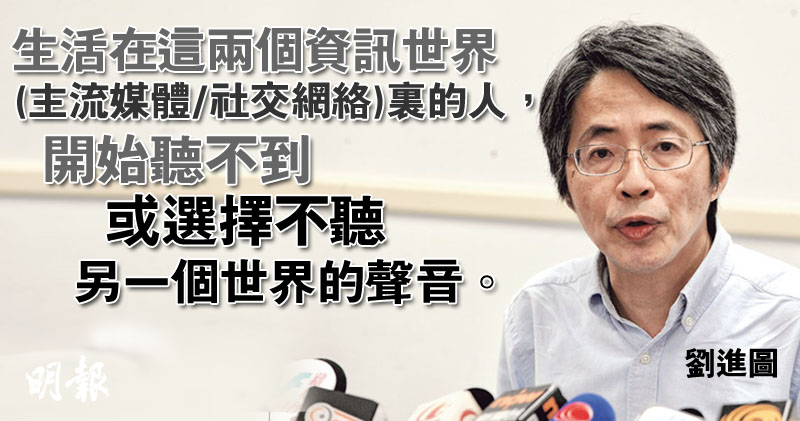
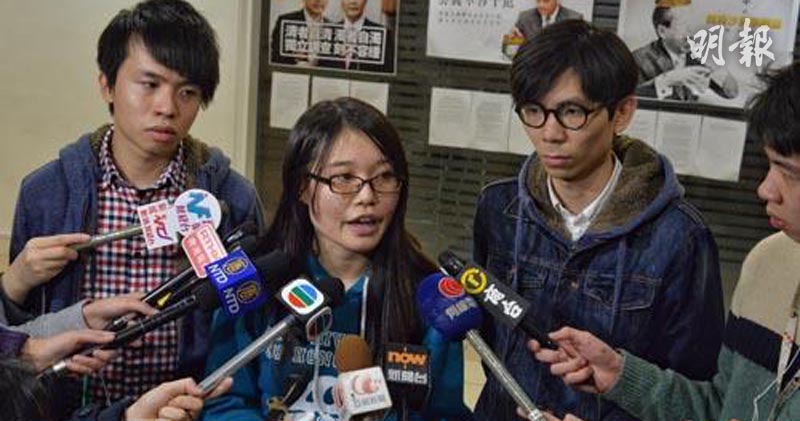
教育線眼:李國章「中毒論」 被指「句句計過數」 【明報專訊】上周二港大學生再次圍堵校委會,校委會主席李國章其後炮轟學生「中毒」,又稱當晚不應學生要求親身解釋校委會決定,因為「唔係你拎住支鬼槍就會出嚟見你」。筆者聽聞,學生未包圍前,李國章在會上被問到會否如前主席梁智鴻一樣,在會後向傳媒解釋校委會決定時,以不想助長media circus(傳媒瘋狂報道)為由拒絕,經校委游說後才首肯「扑咪」,但終因學生圍堵而沒成事。 被指原拒「扑咪」 免「傳媒瘋報」 據聞,李國章在上周會議中用英文說,他不會出去見傳媒,因每次校委會會議都成了media circus,他不想助長,但有校委就說他不能不交代,終說服了他。media circus的中文直譯為「傳媒馬戲團」,牛津詞典的解釋是a period of frenetic media coverage of an event or person,即傳媒瘋狂報道某事或某人。 又據聞,那次會議甫開始,李即為自己護航,說他擔任教育統籌局長時批准港大開展百周年校園,又批准港大同學會開辦中學,怎會欺負港大?他亦指校友評議會反對他任主席,僅4000多人投票,但會員數目逾16萬,結論是「this is political rubbish(這是政治垃圾)」。 李國章秘書昨回覆筆者稱,李在校委會會議上已決定會後見記者,其後因場面混亂才取消,至於李有沒有說過media circus或political rubbish,秘書指她沒聽過,會再向李了解。 政界中人:挑釁令學生拉倒會面 李國章在圍堵事件後開記招指責公民黨、泛民和港大生,之後遭「圍攻」,有跟李交過手的政界中人說,李很聰明,「難道他預計不到講完後其他人的反應嗎?他句句話都計過數」。 該政界人士認為李是想挑釁學生,令他們主動拉倒「說好了的會面」,現學生要求在港大會面,又要指定校委列席,李有理由拒絕;學生應放棄這些不重要的堅持,爭取對話,讓公眾透過傳媒親眼見他們向李提出廢除特首任校監制等,「這些訴求,社會是有共鳴的」。他說,跟李國章交手,最重要是冷靜,爭取包括龐大校友網絡支持。他明白學生要爭取社會關注,但先暴者輸,學生在去年及上周圍堵已輸了,「上次只得300個學生參與行動,團結面不夠力,若讓公眾見到很多學生和平靜坐,情况會多不同?」罷課行動亦一樣,「不可以發個電郵就要十大院長仆來見你,就要教師跟你罷課,團結更多人是要時間去發酵的」。 保安甩趾甲 不滿圍堵行動 圍堵行動也惹來保安不滿。港大職員協會會長陳捷貴說,當天出動的保安中,9人屬港大保安部,混亂中「有女同事嚇到喊,有人整到隻腳趾甲甩出來,有人撞傷」,其中負責指揮的保安部女行政人員在落石級時跌倒送院。陳指有保安員事後要求日後校委會開會增加保安人手,亦有人要求找警方到場戒備。 筆者聽聞,圍堵中有學生說多次被保安掌摑,另有港大中人稱,經過去年八一八事件,絕不能再找警察入校戒備,若不想以後有衝擊,李國章應學梁智鴻做「老好人」,面對富爭議決定都設法安撫各方,為學生消消氣。
Although it remains the name of the ground of one of England's famous old football clubs, since 1989 the word Hillsborough has more strongly evoked Britain's worst sporting disaster.
On 15 April 1989, at the start of an FA Cup semi-final, a crush on the steel-fenced terraces of Sheffield Wednesday's stadium resulted in the death of 96 Liverpool fans and left hundreds more injured.
The inquiry into the disaster, led by Lord Justice Taylor, established the main cause as a failure of police crowd control.
Events began to unfold from around 14:30 BST. The game was to be a repeat of the 1988 semi-final, in which Liverpool had faced Nottingham Forest at the same venue.
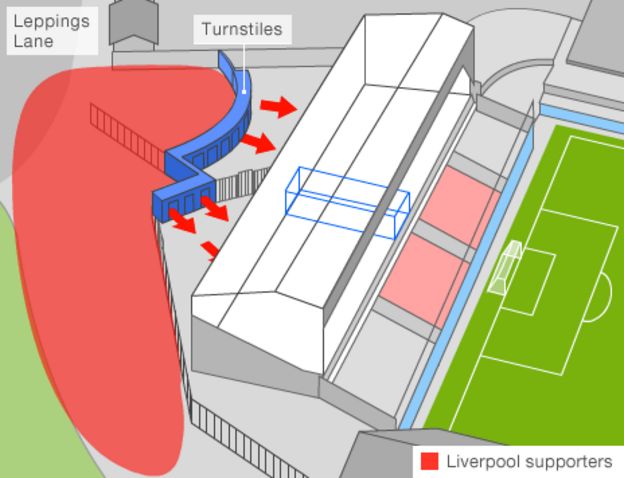
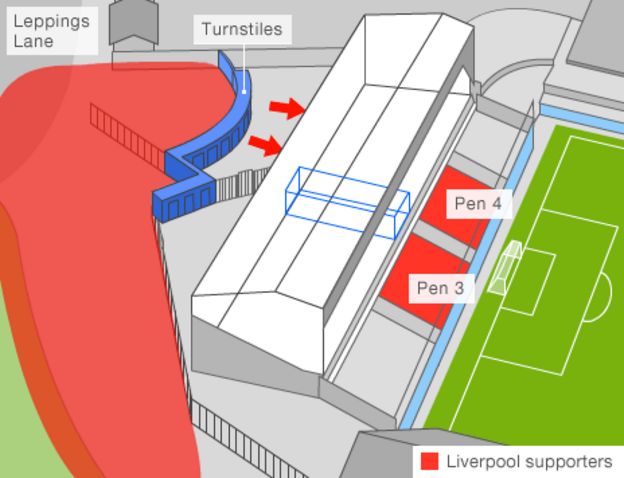
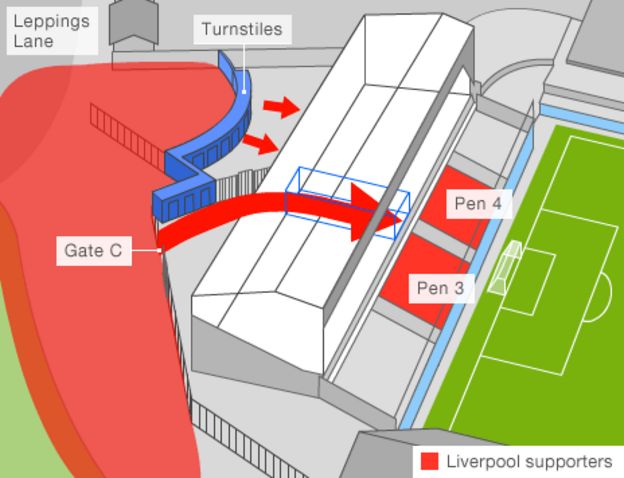
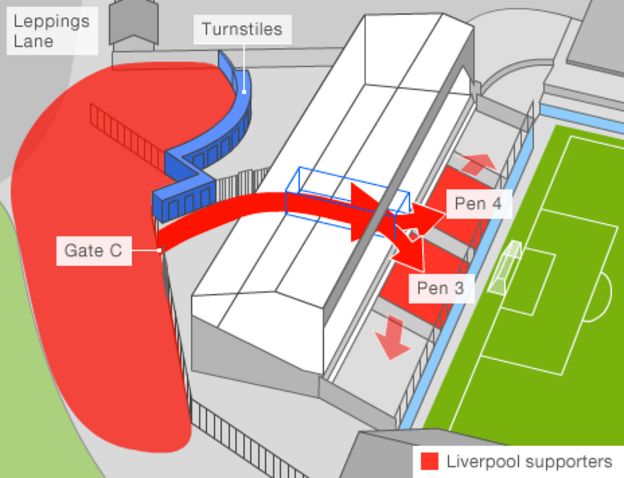
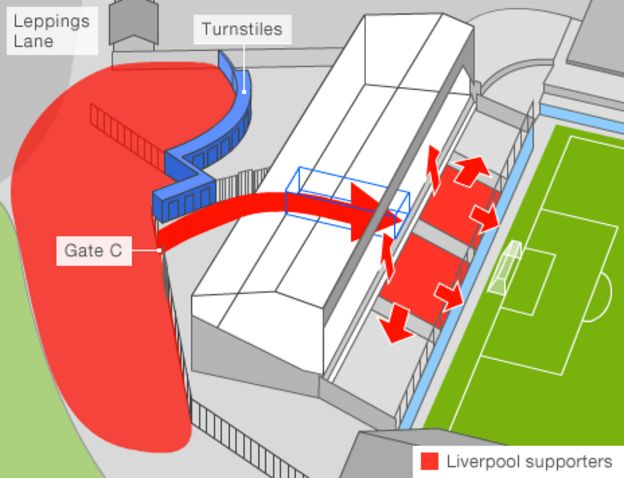
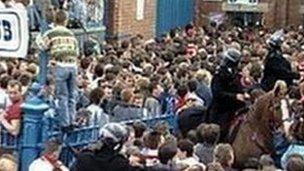
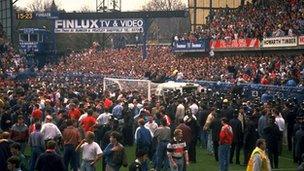
Image caption1430-1440: Several thousand Liverpool supporters are gathered outside the ground at the Leppings Lane end. Decrepit turnstiles mean admission to the ground is slow.Image caption1450: Pens 3 and 4 on the stand's lower terrace are full. Their official combined capacity was 2,200, though it is later discovered this should have been reduced to 1,600 as crush barriers did not meet official standards.Image caption1452: Police order Gate C - a large exit gate - to be opened to alleviate the crush outside the ground. Around 2,000 supporters enter the ground and make for a tunnel leading directly to pens 3 and 4.Image caption1459: The influx of fans caused severe crushing in pens 3 and 4. Fans begin climbing over fences to escape. It is later estimated that more than 3,000 supporters were admitted to the central pens, almost double the "safe" capacity.Image caption1500: Match kicks off. Five minutes later, a crush barrier inside pen 3 gives way, causing people to fall over. Supporters climb perimeter fences or are dragged to safety by fans in the stand's upper tiers.Image caption1506: Match stopped by referee. Some 730 people are injured, 96 fatally. In the chaotic aftermath, supporters desperately try to resuscitate the injured.
Liverpool fans had begun arriving at the ground from midday, but had to enter their designated stand at Leppings Lane through a small number of decrepit turnstiles.
Once inside, many made their way on to the terraced lower stand which was ringed with blue-painted steel fences and laterally divided into "pens".
Image captionA crush of supporters built up outside the ground
Fencing had been put up by many football clubs during the 1970s and 80s to control crowds and prevent pitch invasions.
By about 14:50, pens 3 and 4 - those directly behind the goal - were full, but outside the ground thousands of fans were still waiting to get in.
The pens' official combined capacity was 2,200. It was later discovered this should have been reduced to 1,600 as crush barriers installed three years earlier did not meet official safety standards.
At 14:52, police ordered a large exit gate - Gate C - to be opened to alleviate the crush outside the ground. Around 2,000 fans then made their way into the ground and headed straight for a tunnel leading directly to pens 3 and 4.
This influx caused severe crushing in the pens. Fans began climbing over side fences into the relatively less packed adjoining pens to escape.
Makeshift stretchers
It was later estimated that more than 3,000 supporters were admitted to the central pens - almost double the "safe" capacity.
At 15:00, the game kicked off. Five minutes later a crush barrier in pen 3 gave way, causing people to fall on top of each other.
Supporters continued to climb perimeter fences to escape, while others were dragged to safety by fans in the upper tiers.
Image captionThe scene of the disaster on 15 April 1989.
At 15:06, a policeman ran on to the pitch and ordered the referee to stop the game. In the chaotic aftermath, supporters tore up advertising hoardings to use as makeshift stretchers and tried to administer first aid to the injured.
The authorities' response to the disaster was slow and badly co-ordinated.
Firefighters with cutting gear had difficulty getting into the ground, and although dozens of ambulances were dispatched, access to the pitch was delayed because police were reporting "crowd trouble".
Of the 96 people who died, only 14 were ever admitted to hospital.
Four days after the disaster, the Sun newspaper published a story under the headline The Truth, and claimed that fans had picked the pockets of victims, and attacked and urinated on police and rescue workers.
The story provoked an intense backlash, with the newspaper boycotted by most newsagents in Liverpool.
In his interim report on 4 August 1989, Lord Justice Taylor wrote that the key element of police control at fault was the failure to close off the tunnel leading to pens 3 and 4 once Gate C had been opened.
He went on to criticise police for their failure to handle the build-up of fans outside the ground properly, and their slow reaction to the unfolding disaster.
Some of his strongest words were reserved for the police commander, Ch Supt David Duckenfield, for "failing to take effective control", and South Yorkshire Police who attempted to blame supporters arriving at the ground "late and drunk".
'Accidental death'
Despite the Taylor Report, which was also critical of Sheffield Wednesday Football Club and Sheffield City Council, on 14 August 1990 the director of public prosecutions decided not to bring criminal charges against any individual, group or body on the grounds of insufficient evidence.
Inquests in 1991 into the deaths of the victims returned a majority verdict of accidental death.
Coroner Dr Stefan Popper limited the scope of the inquests to events up to 15:15, on the grounds that all the victims were either dead or brain dead by this time.
However, this meant that the response of the police and ambulance services after 15:15 could not be properly examined.
Many families disputed his findings and began to campaign for a fresh inquiry.
In July 1991 the Police Complaints Authority recommended that Ch Supt Duckenfield and his assistant, Supt Bernard Murray, should face disciplinary charges. However, Ch Supt Duckenfield retired on medical grounds and the case against Supt Murray was eventually dropped.
In the wake of renewed public and media interest in the disaster, which followed the broadcast of Jimmy McGovern's documentary-drama Hillsborough in 1996, Home Secretary Jack Straw ordered a "scrutiny of evidence".
Lord Justice Stuart-Smith was appointed to review "new" evidence which had not been submitted to the inquiry or inquests and also dozens of police and witness statements, apparently critical of police, which had been altered.
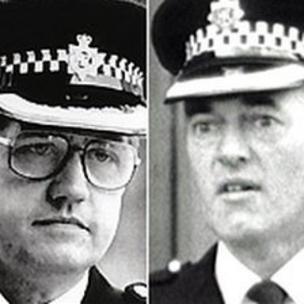
Image captionDavid Duckenfield (L) and Bernard Murray faced disciplinary proceedings and both left the force
Lord Justice Stuart-Smith's conclusion was that the fresh evidence did not add anything significant to the understanding of the disaster, and that while statements should not have been edited, this was simply an "error of judgement".
Jack Straw accepted the findings and ruled out a new inquiry, but in August 1998 the Hillsborough Family Support Group brought charges of manslaughter against David Duckenfield and his deputy, Supt Bernard Murray, in a private prosecution.
The case came to trial in 2000. After six weeks the jury found Mr Murray not guilty of manslaughter and said it could not reach a verdict on Mr Duckenfield.
The judge, Mr Justice Hooper, ruled out a majority verdict and refused a retrial on the grounds that Mr Duckenfield had faced public humiliation and a fair trial would be impossible.
In 2006, Anne Williams, the mother of 15-year-old victim Kevin Williams, took a case to the European Court of Human Rights challenging the verdict of the original inquest.
She claims her son was still alive at 16:00 on the day of the disaster and did not die from traumatic asphyxia.
The court rejected the case in March 2009 on the grounds that the time period for her challenge had expired.
Lingering suspicion
As the 20th anniversary passed, campaigners including the Hillsborough Family Support Group continued to press for the release of the full facts about the disaster, amid lingering suspicion that some details had been withheld.
In April 2009, the then Home Secretary Jacqui Smith requested South Yorkshire Police to release secret files containing detailed evidence.
In December that year, the Hillsborough Independent Panel was set up by Home Secretary Alan Johnson to oversee a "full public disclosure of relevant government and local information".
Delivering its report in September 2012, the panel found that police had deliberately altered more than 160 witness statements in an attempt to blame Liverpool fans for the fatal crush.
It found that crowd safety was "compromised at every level" and that 41 of the 96 who died could have survived, prompting calls for fresh inquests.
The panel also found that the source of the Sun newspaper story was a "local Sheffield press agency informed by several SYP officers, an SYP Police Federation spokesperson and a local MP (Sir Irvine Patnick)".
The disclosures prompted apologies from Prime Minister David Cameron and former Sun editor Kelvin Mackenzie, and calls for a criminal investigation into the police handling of the disaster.
In December 2012 the High Court quashed the original inquest verdicts, and Home Secretary Teresa May ordered a fresh police inquiry into the disaster.