Hong Kong Pictures Show Rage Meeting Defiance As Ugly Clashes Break Out Over Pro-Democracy Protests
The Huffington Post UK/ AP
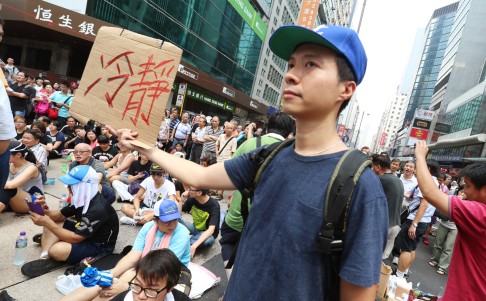
Pushing, yelling, tears and rage; hundreds of Hong Kong residents furiously tried to force peaceful pro-democracy activists from the streets they were occupying Friday as tensions rose in the weeklong protests that have shut down parts of the city.
The determined protesters have said that if authorities do not act to protect the unarmed demonstrators, they would retract an agreement to hold talks with the city government as proposed by Hong Kong's leader, Chief Executive Leung Chun-ying.
"Stop the violence or we call off the talks," the groups of students and other activists said in a statement.
But the scuffles breaking out in Kowloon's crowded Mong Kok district were the most chaotic since police used tear gas and pepper spray on Sunday in an unsuccessful attempt to disperse protesters pushing for greater electoral reforms.
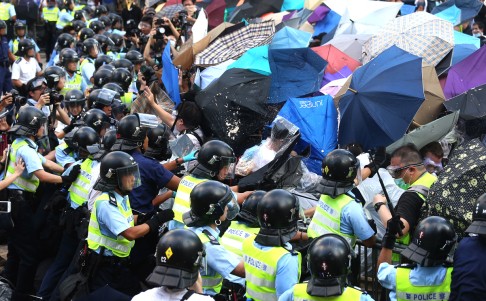
Police were hard-pressed to keep order as the two sides tussled in a tense standoff. The visibly older people trying to force the vastly outnumbered protesters out were yelling, shoving and at times trying to drag the protesters away - leaving many of the young students sobbing.
While the democracy activists bravely linked arms and held hands as they tried to stand their ground against the huge crowd, police formed cordons and escorted some of the protesters away as hundreds of angry onlookers chanted, "Go home!"
 ASSOCIATED PRESS
Student protesters are overwhelmed with emotions as they hold onto their tent while being threatened by residents and pro-Beijing supporters in Kowloon's crowded Mong Kok district, Friday, Oct. 3, 2014 in Hong Kong. Clashes broke out Friday as Hong Kong residents and pro-Beijing supporters tried to force pro-democracy activists from the streets they were occupying, reviving the possibility that the weeklong standoff could turn violent despite and attempt by the city's leader to defuse the situation. (AP Photo/Wong Maye-E)
 ALEX OGLE via Getty Images
A man is held back by police as he screams at pro-democracy protesters to stop occupying an area of the Causeway Bay district of Hong Kong on October 3, 2014. Hong Kong has been plunged into the worst political crisis since its 1997 handover as pro-democracy activists take over the streets following China's refusal to grant citizens full universal suffrage. AFP PHOTO / ALEX OGLE (Photo credit should read Alex Ogle/AFP/Getty Images)
 ASSOCIATED PRESS
A student protester is overwhelmed with emotions as they are threatened by residents and pro-Beijing supporters in Kowloon's crowded Mong Kok district, Friday, Oct. 3, 2014 in Hong Kong. Clashes broke out Friday as Hong Kong residents and pro-Beijing supporters tried to force pro-democracy activists from the streets they were occupying, reviving the possibility that the weeklong standoff could turn violent despite and attempt by the city's leader to defuse the situation. (AP Photo/Wong Maye-E)
 ASSOCIATED PRESS
A student protester is injured after being pulled off and hit by residents and pro-Beijing supporters while local police are escorting him out of the protest area in Kowloon's crowded Mong Kok district, Friday, Oct. 3, 2014 in Hong Kong. Clashes broke out Friday as Hong Kong residents and pro-Beijing supporters tried to force pro-democracy activists from the streets they were occupying, reviving the possibility that the weeklong standoff could turn violent despite and attempt by the city's leader to defuse the situation. (AP Photo/Wong Maye-E)
 Chris McGrath via Getty Images
HONG KONG - OCTOBER 03: Local residents and pro-government supporters scream at pro-democracy protesters on October 3, 2014 in Mong Kok, Hong Kong. Fights broke out between local residents and pro government supporters when they attempted to force pro-democracy activists from their protest site. Thousands of pro democracy supporters continue to occupy the streets surrounding Hong Kong's Financial district. Protest leaders have set an October 1st deadline for their demands to be met and are calling for open elections and the resignation of Hong Kong's Chief Executive Leung Chun-ying. (Photo by Chris McGrath/Getty Images)
 ASSOCIATED PRESS
A pro-democracy protester is taken away by police offers as an ambulance tries to leave the compound of the chief executive office in Hong Kong, Friday, Oct. 3, 2014. Hong Kong protesters on Friday welcomed an overnight offer by the territory's leader of talks to defuse the crisis over demonstrations seeking democratic reforms, though they continued to demand he resign and maintained barricades around government headquarters, frustrating staff going to work. (AP Photo/Vincent Yu)
 ASSOCIATED PRESS
A pro-democracy student protester, left, argues with angry locals trying to remove the barricades blocking local streets in Causeway Bay, Hong Kong, Friday, Oct. 3, 2014. Hong Kong protest leaders on Friday welcomed an offer by the territory's leader of talks to defuse the crisis over demonstrations seeking democratic reforms, though they continued to demand he resign and maintained barricades around government headquarters, frustrating staff going to work. (AP Photo/Wally Santana)
 ASSOCIATED PRESS
Angry locals confront pro-democracy student protesters demanding they remove the barricades blocking local streets in Causeway Bay, Hong Kong, Friday, Oct. 3, 2014. Hong Kong protest leaders on Friday welcomed an offer by the territory's leader of talks to defuse the crisis over demonstrations seeking democratic reforms, though they continued to demand he resign and maintained barricades around government headquarters, frustrating staff going to work. (AP Photo/Wally Santana)
 ASSOCIATED PRESS
Locals remove barricades surrounding the pro-democracy student protesters' encampment blocking local streets in Causeway Bay, Hong Kong, Friday, Oct. 3, 2014. Hong Kong protest leaders on Friday welcomed an offer by the territory's leader of talks to defuse the crisis over demonstrations seeking democratic reforms, though they continued to demand he resign and maintained barricades around government headquarters, frustrating staff going to work. (AP Photo/Wally Santana)
 ASSOCIATED PRESS
Locals demand police to remove barricades set up by pro-democracy student protesters blocking streets in Causeway Bay, Hong Kong, Friday, Oct. 3, 2014. Hong Kong protest leaders on Friday welcomed an offer by the territory's leader of talks to defuse the crisis over demonstrations seeking democratic reforms, though they continued to demand he resign and maintained barricades around government headquarters, frustrating staff going to work. (AP Photo/Wally Santana)
 ASSOCIATED PRESS
A pro-democracy student protester argues with angry locals trying to remove the barricades blocking streets in Causeway Bay, Hong Kong, Friday, Oct. 3, 2014. Hong Kong protest leaders on Friday welcomed an offer by the territory's leader of talks to defuse the crisis over demonstrations seeking democratic reforms, though they continued to demand he resign and maintained barricades around government headquarters, frustrating staff going to work. (AP Photo/Wally Santana)
 ASSOCIATED PRESS
A pro-democracy student protester rests on the ground after collapsing during scuffles with locals trying to remove the barricades blocking streets in Causeway Bay, Hong Kong, Friday, Oct. 3, 2014. Hong Kong protest leaders on Friday welcomed an offer by the territory's leader of talks to defuse the crisis over demonstrations seeking democratic reforms, though they continued to demand he resign and maintained barricades around government headquarters, frustrating staff going to work. (AP Photo/Wally Santana)
 ASSOCIATED PRESS
A pro-democracy student protester, left, is pressed by angry locals trying to remove the barricades blocking streets in Causeway Bay, Hong Kong, Friday, Oct. 3, 2014. Hong Kong protest leaders on Friday welcomed an offer by the territory's leader of talks to defuse the crisis over demonstrations seeking democratic reforms, though they continued to demand he resign and maintained barricades around government headquarters, frustrating staff going to work. (AP Photo/Wally Santana)
 ASSOCIATED PRESS
A pro-democracy student protester tries to negotiate with angry locals trying to remove the barricades blocking streets in Causeway Bay, Hong Kong, Friday, Oct. 3, 2014. Hong Kong protest leaders on Friday welcomed an offer by the territory's leader of talks to defuse the crisis over demonstrations seeking democratic reforms, though they continued to demand he resign and maintained barricades around government headquarters, frustrating staff going to work. (AP Photo/Wally Santana)
 ALEX OGLE via Getty Images
Pro-democracy protesters try to stop a barricade at their demonstration area from being removed in the Causeway Bay district of Hong Kong on October 3, 2014. Hong Kong has been plunged into the worst political crisis since its 1997 handover as pro-democracy activists take over the streets following China's refusal to grant citizens full universal suffrage. AFP PHOTO / ALEX OGLE (Photo credit should read Alex Ogle/AFP/Getty Images)
 Chris McGrath via Getty Images
HONG KONG - OCTOBER 03: An injured pro-democracy activist is carried back to a tent for medical treatment after clashing with local residents and pro-government supporters on October 3, 2014 in Mong Kok, Hong Kong. Fights broke out between local residents and pro government supporters when they attempted to force pro-democracy activists from their protest site. Thousands of pro democracy supporters continue to occupy the streets surrounding Hong Kong's Financial district. Protest leaders have set an October 1st deadline for their demands to be met and are calling for open elections and the resignation of Hong Kong's Chief Executive Leung Chun-ying. (Photo by Chris McGrath/Getty Images)
 Chris McGrath via Getty Images
HONG KONG - OCTOBER 03: Pro-democracy activists are pushed through the crowd to safety after clashing with local residents and pro-government supporters on October 3, 2014 in Mong Kok, Hong Kong. Fights broke out between local residents and pro government supporters when they attempted to force pro-democracy activists from their protest site. Thousands of pro democracy supporters continue to occupy the streets surrounding Hong Kong's Financial district. Protest leaders have set an October 1st deadline for their demands to be met and are calling for open elections and the resignation of Hong Kong's Chief Executive Leung Chun-ying. (Photo by Chris McGrath/Getty Images)
 Chris McGrath via Getty Images
HONG KONG - OCTOBER 03: Local residents and pro-government supporters scream at pro-democracy protesters on October 3, 2014 in Mong Kok, Hong Kong. Fights broke out between local residents and pro government supporters when they attempted to force pro-democracy activists from their protest site. Thousands of pro democracy supporters continue to occupy the streets surrounding Hong Kong's Financial district. Protest leaders have set an October 1st deadline for their demands to be met and are calling for open elections and the resignation of Hong Kong's Chief Executive Leung Chun-ying. (Photo by Chris McGrath/Getty Images)
 Chris McGrath via Getty Images
HONG KONG - OCTOBER 03: A local resident breaks through police lines and attempts to reach the pro-democracy tent on October 3, 2014 in Mong Kok, Hong Kong. Fights broke out between local residents and pro government supporters when they attempted to force pro-democracy activists from their protest site. Thousands of pro democracy supporters continue to occupy the streets surrounding Hong Kong's Financial district. Protest leaders have set an October 1st deadline for their demands to be met and are calling for open elections and the resignation of Hong Kong's Chief Executive Leung Chun-ying. (Photo by Chris McGrath/Getty Images)
 Chris McGrath via Getty Images
HONG KONG - OCTOBER 03: A local resident screams at pro-democracy protesters on October 3, 2014 in Mong Kok, Hong Kong. Fights broke out between local residents and pro government supporters when they attempted to force pro-democracy activists from their protest site. Thousands of pro democracy supporters continue to occupy the streets surrounding Hong Kong's Financial district. Protest leaders have set an October 1st deadline for their demands to be met and are calling for open elections and the resignation of Hong Kong's Chief Executive Leung Chun-ying. (Photo by Chris McGrath/Getty Images)
 ALEX OGLE via Getty Images
A police officer (R) pulls away a man pointing at himself after being accused of being a pro-Beijing agitator at a pro-democracy protest in the Causeway Bay district of Hong Kong on October 3, 2014. Hong Kong has been plunged into the worst political crisis since its 1997 handover as pro-democracy activists take over the streets following China's refusal to grant citizens full universal suffrage. AFP PHOTO / ALEX OGLE (Photo credit should read Alex Ogle/AFP/Getty Images)
 ALEX OGLE via Getty Images
A group of men in masks walk towards a group of pro-democracy protesters after removing barricades from a demonstration area in the Causeway Bay district of Hong Kong on October 3, 2014. Hong Kong has been plunged into the worst political crisis since its 1997 handover as pro-democracy activists take over the streets following China's refusal to grant citizens full universal suffrage. AFP PHOTO / ALEX OGLE (Photo credit should read Alex Ogle/AFP/Getty Images)
 PHILIPPE LOPEZ via Getty Images
Pro-democracy demonstrators look on as they protect a barricade from anti-protesters in an occupied area of Hong Kong on October 3, 2014. Pro-democracy protesters clashed with opposition groups in two of Hong Kong's busiest shopping districts on October 3, with police stepping in to try to calm the chaos. AFP PHOTO / Philippe Lopez (Photo credit should read PHILIPPE LOPEZ/AFP/Getty Images)
 ALEX OGLE via Getty Images
A group of men in masks beat up a man (R) who tried to stop them from removing barricades from a pro-democracy protest area in the Causeway Bay district of Hong Kong on October 3, 2014. Hong Kong has been plunged into the worst political crisis since its 1997 handover as pro-democracy activists take over the streets following China's refusal to grant citizens full universal suffrage. AFP PHOTO / ALEX OGLE (Photo credit should read Alex Ogle/AFP/Getty Images)
 PHILIPPE LOPEZ via Getty Images
An anti-protester (L) shouts at pro-democracy demonstrators in an occupied area of Hong Kong on October 3, 2014. Pro-democracy protesters clashed with opposition groups in two of Hong Kong's busiest shopping districts on October 3, with police stepping in to try to calm the chaos. AFP PHOTO / Philippe Lopez (Photo credit should read PHILIPPE LOPEZ/AFP/Getty Images)
 PHILIPPE LOPEZ via Getty Images
An anti protester shouts at a pro-democracy demonstrator in an occupied area of Hong Kong on October 3, 2014. Pro-democracy protesters clashed with opposition groups in two of Hong Kong's busiest shopping districts on October 3, with police stepping in to try to calm the chaos. AFP PHOTO / Philippe Lopez (Photo credit should read PHILIPPE LOPEZ/AFP/Getty Images)
 Thomas Campean via Getty Images
HONG KONG - OCTOBER 03: Police stand guard outside the government headquarters on October 3, 2014 in Hong Kong, Hong Kong. Thousands of pro democracy supporters continue to occupy the streets surrounding Hong Kong's Financial district. The protesters are calling for open elections and the resignation of Hong Kong's Chief Executive Leung Chun-ying, who last night agreed to hold talks with the protest leaders in a bid to diffuse the growing unrest. (Photo by Thomas Campean/Getty Images)
 ASSOCIATED PRESS
In Causeway Bay, a major shopping area that has also been occupied by protesters, groups of young men in face masks were forced away from the protesters by police.
Hong Kong's top civil servant, Chief Secretary Carrie Lam, said Friday she had begun organising the talks with the protesters, who have continued their sit-ins after Leung rejected their calls to resign.
"I am indeed very concerned about the clashes we have seen in the streets," Lam said.
"Sentiments are running high and there is a high chance of conflict on the streets," she said. "So I am urging protesters who have been occupying parts of the territory to consider retreating ... so that the police can restore law and order."
"I would like to appeal to members of the public that they should observe the laws of Hong Kong when they are expressing their views," police spokesman Steve Hui said when asked about the confrontation in Mong Kok, a working class area far from the main protest site in downtown Hong Kong, the Admiralty area near the territory's government headquarters.
Benny Tai, leader of the broader pro-democracy movement Occupy Central With Love and Peace issued a public call for all protesters to shift back to Admiralty where they began their protests last weekend. He said the group was confident they could guarantee the protesters' safety if they moved back to that area.
The protests, led mostly by university students, have been in the streets since last Friday, pushing for the Chinese government to reverse its recent decision requiring a mostly pro-Beijing committee approve candidates for Hong Kong's first election to choose the territory's leader in 2017. The demonstrators want open nominations.
The protests are the biggest challenge to Beijing's authority since China took control of the former British colony in 1997.
Student protesters had threatened to surround or occupy government buildings if the city's chief executive, Leung Chun-ying, did not step down by Thursday, and police had warned of serious consequences if they did that. Late Thursday, Leung held a news conference to offer the talks, but said "I will not resign."
Some who are sympathetic to the protesters' demands for wider political reforms complained the police were not doing enough to protect the demonstrators.
"We saw people with no uniforms in Causeway Bay and Mong Kok attack protesters and take away their belongings," said Cyd Ho, vice-chairwoman of the Labor Party.
"Police have the duty to safeguard peaceful demonstrations by Hong Kong citizens," Ho said. "If police do not intervene this sets a dangerous precedent ... that if people are unhappy with protesters they can attack them with impunity."
But some Hong Kong residents complained that the protests were undermining their livelihoods.
"It affected my company, a perfume business, to deliver goods in the area," said Ken Lai in the bustling Causeway Bay neighborhood. "I really dislike the fact that they occupied so many areas, all scattered around the city. I'm a Hong Konger too. The occupiers don't represent all of us."
A front-page editorial Friday in the People's Daily newspaper, published by China's ruling Communist Party, underlined the leadership's unwillingness to negotiate changes to its August decision.