顯示具有 體重管理 標籤的文章。 顯示所有文章

2018年2月19日 星期一

3 Minutes Before Sleep: Simple Exercises to Slim Down Your Legs


3 Minutes Before Sleep: Simple Exercises to Slim Down Your Legs


Fitness coaches say that the most important thing about working out is persistence. However, let’s be honest with ourselves: daily exercise is not the most exciting thing to do.
It’s easier to strive for the perfect shapes with due diligence if you know that your exercises won’t take a lot of time.
A short set developed by the famous American celebrity coach Tracy Anderson helps to eliminate “fat deposits” on the knees and hips that can appear even in slender people. Let’s work out the front, back, and inner thigh surface and get thinner with the help of short exercises.
Don’t forget about the bonus at the end of the article: how to make your legs feel less tired and puffy.

What to do to make your legs slender

  1. Workout place: a bed.
  2. Workout duration: 3 minutes.
  3. When to work out: after you wake up or before going to bed at night.
  4. Frequency: every day.

1. Toning the front part of the thighs

Works and tones the front part of the thighs, knees, and abs.
The initial position: Lying on your back, arms down on both sides of the body. Raise your legs so that they make a 90-degree angle with your body. Don’t bend your knees. Pull your toes up. Bend your knees one by one, and return your legs to the initial position. Keep your knees together, and keep the front part of your thighs tensed.
Repeat: 10 times for each leg.
Self-check if you’re doing it right: Feeling hot in your muscles.
Important: In the initial position, your knees should be as straight as possible.

2. Toning the back part of the thighs

Works and tones the front and back part of the thighs, knees, and abs.
This exercise consists of 2 parts.
The first part: The initial position — lying on your back, legs raised, toes pulled toward your body. Hold your knees together, and bend your knees one by one. Important: your toes should always be pulled toward your body, and your heels should reach your buttocks.
Repeat: 10 times for each leg.
The second part: The initial position — lying on your back, legs raised and a little bit bent at the knees. Make swings with both legs, raising your buttocks and keeping the upper part of your legs tensed.
Repeat: 20 times.
Self-check if you’re doing it right: Feeling the tension in the muscles of the back part of your thighs and feeling a slight burning.

3. Toning the inner part of the thighs

Works and tones the upper part of the legs, buttocks, and abs.
The initial position: Lying on your back, keeping your legs raised and crossed with your right leg over your left leg. Both legs are tensed and pressed against each other. Bend your knees toward the sides to make a “plié” movement, and then return to the initial position.
Important: Your legs should always be tensed and pressed against each other.
Repeat: 10 times with your right leg in the upper position and 10 times with your left leg in the upper position.
Self-check if you’re doing it right: Feeling leg pressure, knees control.

Bonus

One of the biggest advantages of this set of exercises is that it can be very useful for those who suffer from swollen legs and varices.
But there is a way to get rid of swelling, pain, and the feeling of tiredness in the legs if those are caused not by a disease but by an unhealthy mode of living, such as sedentary work, the wrong shoes, or a lack of physical activity.
Specialists suggest 3 simple rules:
  1. Walking. It might seem strange, but the more you walk the less your legs swell and become painful. The most important condition is comfortable footwear. An optimal amount of walking is 30-60 minutes 3 times a week. In order to speed up blood flow, walk for 10 minutes every 2 hours.
  2. Exercise for the ankles. Every time you remember this, bend your ankles for 20-30 times, pulling your toes toward and away from your body. This exercise improves blood circulation and helps to remove excess liquid.
  3. If you like fitness, go for swimming or water aerobics. “Struggling” against water pressure helps to improve water and blood flow in the limbs.
What do you think about these methods of improving the health of your legs? Share your opinion with us in the comments.
Preview photo credit depositphotos.com
Illustrated by Daniil Shubin for BrightSide.me 

Flag Counter


2018年1月19日 星期五

走路可以動到90%的肌肉


走路可以動到90%的肌肉!德國骨科權威教你:3招用「走路」治療背痛


走路可以動到90%的肌肉!德國骨科權威教你:3招用「走路」治療背痛
走離疼痛
走路是最原始的運動,人類從千百年前就開始用雙腳移動。但隨著時代進步,這種自然的移動方式逐漸由其他東西取代,我們每天早上搭電梯到地下室取車,開車去工作,然後在辦公室坐上 8 到 10 小時,晚上又坐在沙發上看電視放鬆。背痛的人通常更少走路了,很可能是為了逃避疼痛,結果卻往往背道而馳。現在各位已經知道太過放鬆會帶來負面效果,因為休息、缺乏運動等同保護姿勢,進而使肌肉更加緊繃,演變成肌肉萎縮。逃避心態則讓疼痛患者漸漸遠離生活的樂趣,專注於疼痛,使疼痛更加惡化。
祕密武器:散步
走路可為腰椎部位的疼痛帶來自然的物理療效。以色列台拉維夫大學的研究人員發現,一週只要3次20到40分鐘的散步就能產生足夠功效。在該研究中有 52 名受試者,年紀落在 18到65歲之間,都有腰椎區域慢性疼痛的問題。
受試者分為兩組,一組完成為期7週、每週2到3次特定的下背部肌肉訓練,由物理治療師提供專業指導;另一組純粹只接受走路訓練,訓練時間一樣是20至40分鐘。兩組受試者的健康狀態都明顯好轉。研究負責人卡斯洛伊特博士(Dr. Michal Katz-Leurer)表示,這證明走路跟背部訓練一樣有效。
走路是萬靈丹
也就是說,午休時的一般散步就能治療背部,能對背部產生幫助,簡單、快速又有效,而稍微激烈一點的快走則更有幫助。瑞查茲博士(Dr. Barbara Richartz)是我們診所心血管部門的主治醫生,她做出的總結是:「其他運動不會像走路一樣動到這麼多肌肉,騎單車只會運動到35%的肌肉,慢跑是70%,但走路就像四輪驅動,會用到90%的肌肉組織。」
換句話說,定期輕鬆的散步或快走宛若無所不能的萬靈丹,不僅可以調整支撐肌肉與運動肌肉,還能調整整個身體結構:
l 加強血液循環、緩解緊繃
l 活動、增強背部肌肉與脊椎關節
l 強化支撐與維持肌肉的承受力
l 增進骨骼強度
l 訓練心血管系統
l 增進免疫力
l 有助減輕體重
l 預防中風與心肌梗塞
l 轉移自己對疼痛的注意力
l 放鬆身體
l 使身心愉悅
把死神拋在後頭
對於目標明確、行動迅速的步行者來說,更能享有額外的好處。澳洲雪梨康科爾醫院的一項研究結果顯示,只要在走路時加入一點節奏,有助於延年益壽。 根據該研究的研究人員計算,死神的平均移動速度是每小時2.9公里,最快不會超過每小時4.8公里。聽起來或許很可笑,但背後有嚴謹的研究支持。該研究記 錄了超過1,705 位、70 歲上下男性的步行速度,研究期間用碼錶測量、觀察時間長達 5 年。研究對象的每小時平均速度是3公里,在 5 年的過程中,共266 位研究對象過世,其中沒有任何一位的每小時速度超過5公里;研究人員還從記錄中 發現,平均速度較高的研究對象通常也有較高的平均壽命。也就是說,走路不僅對背部有幫助,而且走得愈快就能把死神拋在後頭。


每步都算數!
有些人比較不喜歡運動,但還是有很多其他的伸展機會。每天盡量善用每次走路的機會,像是用爬樓梯取代坐電梯,從捷運站走回家而不要轉車、走路而不是開車去買生活用品,吃完午飯或晚飯後稍稍散步一下。
重點在於,固定運動是控制內在野獸的最好辦法!養成每天散步的好習慣,從頭避免任何的怠惰或軟弱。
讓雙腳不受束縛
喀奈普(Sebastian Kneipp)牧師一百多年前建議的療法,至今仍然適用,也就是赤足有益健康且能強健背部。我們的腳天生就能適應些微不平的地形,可以像鎖鏈一樣帶動身體、保持平衡。為了維持平衡,我們的腳掌、軀幹和整個身體的肌肉都會出力,所以從現在開始,請盡量在石頭、草地、沙地上走路,或是穿專業的祼足鞋溯溪或赤足在平衡墊上練習。我們診所設有專供患者使用的散步花園,設有各種步道,以及赤足散步區。如果你有自己的花園,也可以規劃一個赤足區,用鵝卵石或大石頭、沙子、植被、冷杉球果佈置。


http://health.businessweekly.com.tw/aarticle.aspx?ID=ARTL000090511&p=1
Flag Counter


2017年10月23日 星期一

Best Exercises for Your Body


Woman exercising at the gym
Getty Images
ERIN BRODWIN / BUSINESSINSIDER.COM
OCTOBER 19, 2017
This story originally appeared on BusinessInsider.com.
If you think running a marathon is the quickest ticket to a rock-hard body, I-Min Lee, a professor of medicine at Harvard Medical School, has news for you: That classic feat isn't as good for your body as it seems.
Instead of long-distance running, which can be hard on your joints and digestive system, Lee recommends five other types of workouts. They generate benefits that range from weight loss and muscle building to protecting your heart and brain and strengthening your bones.
The findings are detailed in a Harvard Medical School health report called "Starting to Exercise" which recommends some of the best exercises for your body.
Here they are.

Five Glaciers to Hike Before They're Gone
Hiking a glacier is an otherworldly experience, and one you should plan to do sooner rather than later.

1. Swimming

"You might call swimming the perfect workout," write the authors of the Harvard Healthbeat newsletter, which summarizes the report's key takeaways and gives insight from Lee.
In addition to working nearly every muscle in your body, swimming can raise your heart rate to improve heart health and protect the brain from age-related decline. Plus, being afloat makes this type of exercise nearly strain-free. "Swimming is good for individuals with arthritis because it's less weight-bearing," Lee said in the newsletter.
When you swim regularly for at least 30 to 45 minutes at a time, you're doing aerobic exercise — a type of workout that a spate of recent research suggests could help battle depression, lift your mood, and reduce stress, among other benefits.

2. Tai chi

Tai chi — also called tai chi chuan — is a Chinese martial art that combines a series of graceful, flowing movements to create a sort of moving meditation. The exercise is performed slowly and gently with a high degree of focus and a special attention paid to breathing deeply. Since practitioners go at their own pace, tai chi is accessible for a wide variety of people — regardless of age or fitness level.
Tai chi "is particularly good for older people because balance is an important component of fitness, and balance is something we lose as we get older," Lee said.

3. Strength training

At its most basic, strength training involves using weight to create resistance against the pull of gravity. That weight can be your own body, free weights like barbells or dumbbells, elastic bands, or weighted ankle cuffs.
Research suggests you can use either heavy weights and a small number of reps or lighter weights and more reps to build stronger, more sturdy muscles.
Chris Jordan, the exercise physiologist who came up with the viral 7-minute workout (officially called the "Johnson & Johnson Official 7 Minute Workout"), told Business Insider that healthy adults should incorporate resistance training on two to three of the four to five days per week that they work out.
You can also use high-intensity interval training (HIIT), which combines the cardiovascular benefits of cycling or running with resistance training, to achieve the same or similar results. If you like HIIT, the 7-minute workout is a great place to start.
Whichever workout you try, the most important thing is to keep doing it.
"To achieve results, consistency is key," Jordan said.

4. Walking

It might sound insignificant, but walking can be powerful medicine.
Several studies suggest that walking for at least 30 minutes — even at a moderate or leisurely pace — can have benefits for the brain and body. One recent study found that in adults ages 60 to 88, walking for 30 minutes four days a week for 12 weeks appeared to strengthen connectivity in a region of the brain where weakened connections have been linked with memory loss. And a pilot study in people with severe depression found that just 30 minutes of treadmill walking for 10 consecutive days was "sufficient to produce a clinically relevant and statistically significant reduction in depression."
If you don't currently exercise regularly, the folks at Harvard recommend starting your walking routine with 10-15 minute treks and building up to 30 or 60-minute hikes.

5. Kegel exercises

Kegel exercises are important for both men and women because they help to strengthen a group of muscles commonly referred to as the "pelvic floor." As we age, these muscles — which include the uterus, bladder, small intestine, and rectum — can start to weaken. But keeping them resilient can have important benefits, ranging from preventing embarrassing accidents like bladder leakage to the accidental passing of gas.
The right way to do kegels involves squeezes the muscles you'd use to hold in urine or gas, according to the folks at Harvard. They recommend holding the contraction for two to three seconds, releasing, and repeating 10 times. For the best results, do them four to five times a day.


Flag Counter


2017年9月5日 星期二


強健心臟關鍵,從強化雙腳開始

作者 / 雲門教室 發表日期 / 2017/9/1  瀏覽數 / 2,100+


有句話說:「樹老根先枯,人老腿先衰。」老化,從腳開始,這真是個傳神的說法。想想,全身部位中,腳是距離心臟最遠之處,也是血管走得最遠的地方。當人一老化,腳部末稍血液循環變差,腳部的血液要回到心臟就更加困難了。
人體有600條肌肉,其中約有70%集中在下半身若是下盤健康有力,就能預防老化,維持青春活力,甚至避免跌倒,或是降低跌倒時的嚴重程度。
我們的雙腳,是人體裡精密且複雜的部位,強健雙腳最好的方法,就是離開椅子「健走」去!這個看似平凡的活動,不僅可以增加心肺功能、強化肌力,更能夠提升骨質密度,預防失智,在大步邁開的同時,保持微微地喘,但仍可說話的程度,每天30分鐘的時間,就能達到健腿的目的。
另外,每天給自己一小段時間「跪坐」,這是一種最自然的腿部延展法,可延展大腿前側的股四頭肌,讓身上最強壯的肌群得到延伸。尤其是喜愛跑步、爬山、騎單車的人,可多做這個姿勢。跪坐時,別將全身的重量壓在兩腳,而是需將脊椎挺直,大腿肌肉必須出力將身體微微撐起。從中醫的眼光來看,跪坐還能修身養性,對胃經、脾經甚至是肝經的通暢,也很有幫助。
健康的雙腿,能帶我們走萬里路,為生活增添許多色彩。下列有3個簡單有效的腳部律動操,實際跟著我們動一動,強健雙腿,活出自信活力!
腳部律動操
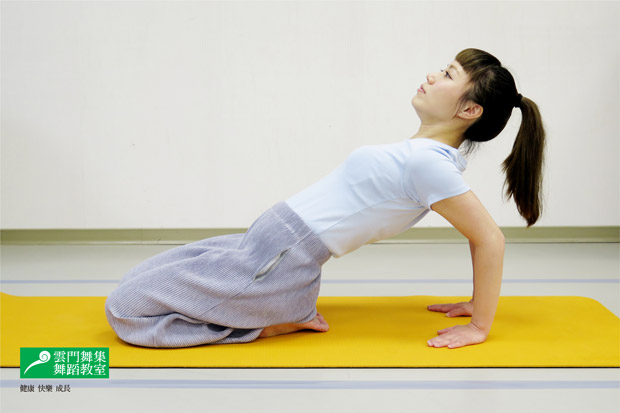
1.  身體呈跪姿,膝蓋輕輕貼地,兩膝相距約20公分,大腳趾相對,臀部坐在腳後跟上;雙手向後撐地,手肘與肩膀同寬,縮小腹,在此做停留調息6到8個呼吸。(若膝蓋貼地仍不覺得緊繃者,後方雙手的小手臂可貼地,讓大腿有更多延展。)
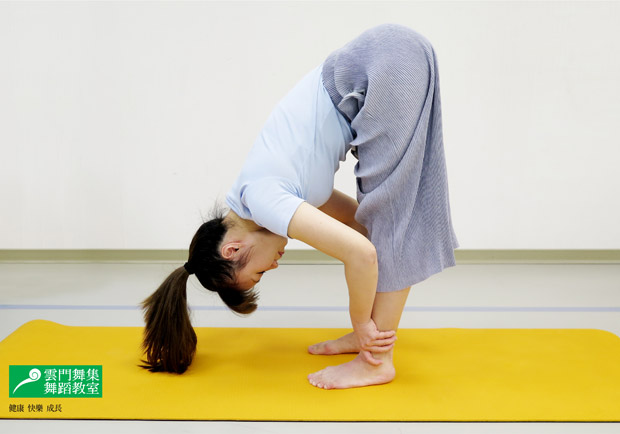
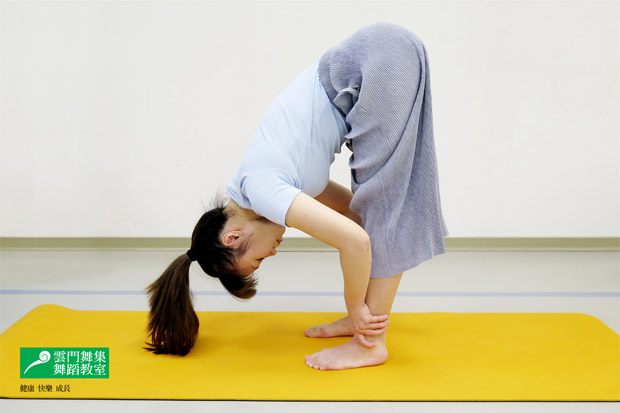
2.  全身站直,身體慢慢向前彎,雙手扶住小腿前側,注意此時的臀部不要往後推,感覺雙腳的後側有緊繃感。
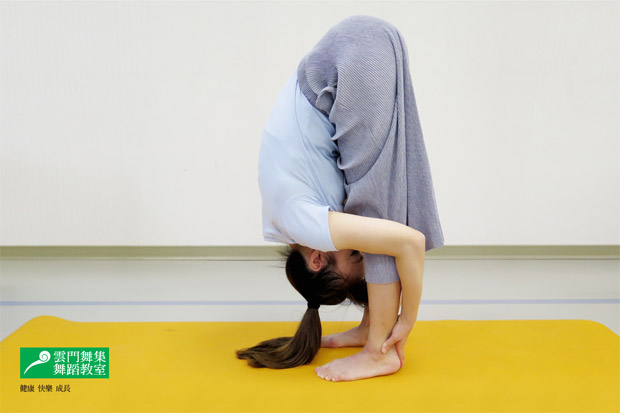
3.  若是柔軟度較好的朋友,可以延續第二個動作,將腰部繼續往下,頭部放輕鬆,雙手抱著小腿後側,再加強延展。
•  溫馨小提醒:
1.  動作1.的「跪坐」非常適合喜愛跑步的朋友,每次跑步完做此延展,不僅可舒緩大腿肌肉的痠痛感,還能拉長大腿肌。
2.  腿部是我們身體力量的泉源,平常可從腳趾、腳底、小腿,一路按摩到大腿,或是變換按壓與拍打的手法,都可有效促進雙腳血液循環,也能釋放小腿緊繃,鬆開足部壓力。
專欄介紹:
身體,是人生中最重要的財富。現代人重視成就與錢財,卻忘了「照顧身心健康」是另一種無形且重要的「財富累積」。雲門教室依循自然韻律「春天甦醒、夏天釋放、秋天沉潛、冬天收斂」4大主軸,與大眾互動分享,如何透過「身體律動」,緩解生活壓力,找到讓身心和諧共處的方法,發現安頓生活的能力。
專欄名稱中,【身體財富ATM】的「A」代表Action(行動),「T」代表Touch(觸動身心),「M」代表Motivation(積極、動機、行動)。
更多內容請上【雲門教室


https://health.gvm.com.tw/webonly_content_16645.html
Flag Counter


2017年7月29日 星期六

照顧你的筋膜


照顧你的筋膜


文/筋肉媽媽
大家都知道人體需要水份,沒事就要多多補充;但是你知道,身體的筋膜,更是需要水份,不然會「乾掉」,開始造成各種身體功能的喪失嗎?
袋鼠可以跳很高,筋膜肌肉都一起做工!
首先先來複習一下「筋膜」是什麼!
你的皮膚與肌肉之間,其實有一層薄薄的結締組織,貫串著全身內外。筋膜上面的末梢神經,是肌肉末梢神經的6-10倍,並且也具有張力與力量,所以你的身體能夠有力量與活動,不單只是肌肉在做工,肌膜也佔了很大的部分!
人體有許多筋膜線,由腳底貫穿到全身,有的在深層,有的在淺層,所以「筋膜是具有連結連貫性的」!並且很多時候你感覺自己在用力,其實是來自於筋膜的用力,不單單只是肌肉而已!
對於淺層筋膜的想像,好比是一盤鮮肉上面的保鮮膜,肌肉就是盤中飧;當保鮮膜過度緊繃沾黏在食物上,食物便無法在盤子內順利滑動,回歸到現實層面,當筋膜開始沾黏,肌肉的活動度便會受限了!但用保鮮膜當比喻,其實也不十分恰當,因為…
筋膜主要由2/3的水分+膠原蛋白構成!
過去的人沒有在人體解剖時發現過筋膜,因為當生命消逝,水份流失,筋膜也會乾掉黏在肌肉上,直到醫學愈來愈進步,才藉由許多攝影技術,捕捉到活生生的筋膜樣貌,進而在更強大的解剖技術下把人體筋膜解剖出來。
筋膜必須保持水水的,當水分能夠自由自在的在筋膜組織間流動,加上運動刺激膠原蛋白增生,筋膜整體的結構才會排列整齊更有彈性。
為了維護筋膜健康,一定要「常常動」!除了動才能刺激膠原蛋白增生,筋膜就像是海綿一樣,經過擠壓拉扯後,水分吸收才會更好,當你擁有健康的筋膜,也才可能有更好的運動成績,美麗體態!
針對久坐一族,可以常常做的滾筒筋膜肌肉放鬆!
久坐,會導致你的筋膜逐漸變「乾」!當你久坐起身後,是否常常覺得身體卡卡的,甚至無法拉直身體?其實部分原因就是因為筋膜開始變乾,張力變差變緊繃,開始沾黏在肌肉上,所以甚至有時候貿然起身活動,會造成受傷發炎!
除了記得每隔一段時間,一定要站起來活動全身,每天也可以用滾筒來放鬆筋膜、伸展肌肉,恢復筋膜的活動度與張力,它才能夠吸收充足的水分;並且增加活動才能讓筋膜內的膠原蛋白被刺激增生,逐漸養回最好的狀態。
久坐族,我們可以常常做以下的放鬆:
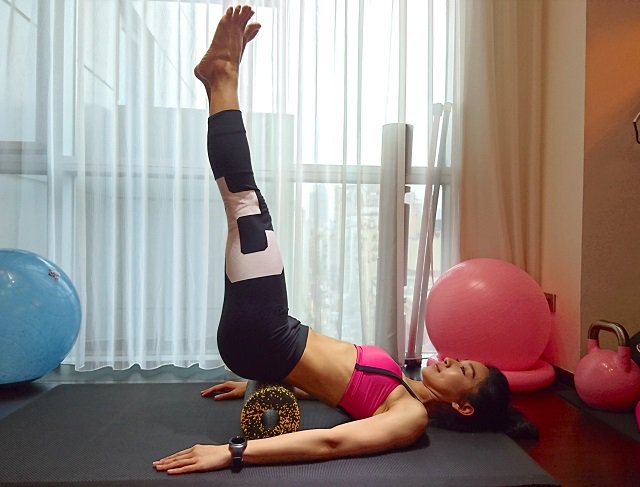
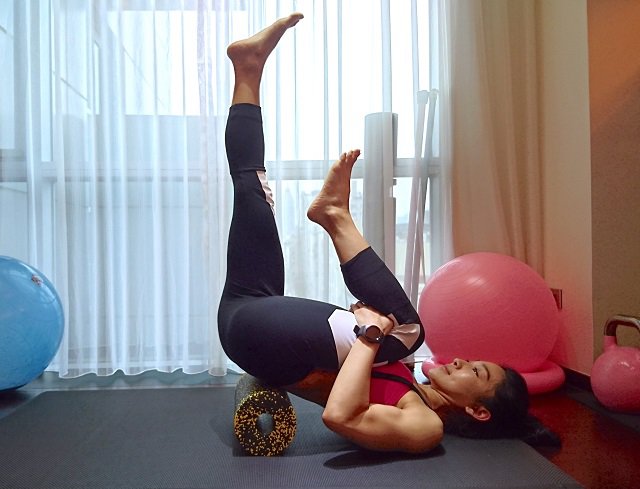
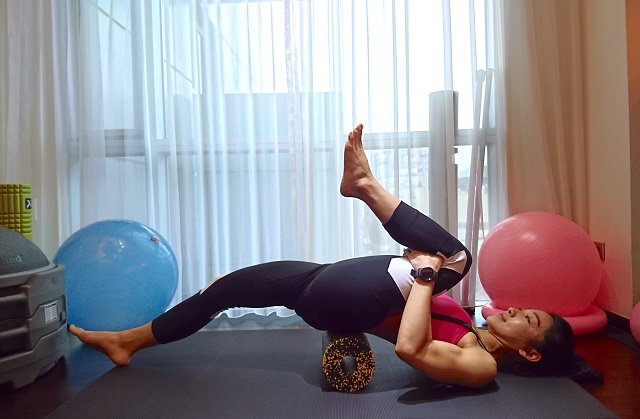
放鬆髖屈肌
將滾筒放在臀部,將雙腳伸直抬高到90度。
雙手抱著將其中一隻腳的大腿(避免抱膝蓋以免造成膝蓋壓力),盡量往胸部靠緊。
另一隻腳往下壓碰地面。持續動作15-60秒後換邊。也可以將伸直的腳做動態式的伸展,來回上下擺動。
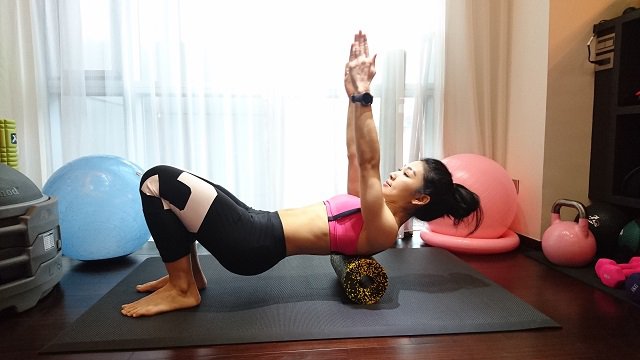
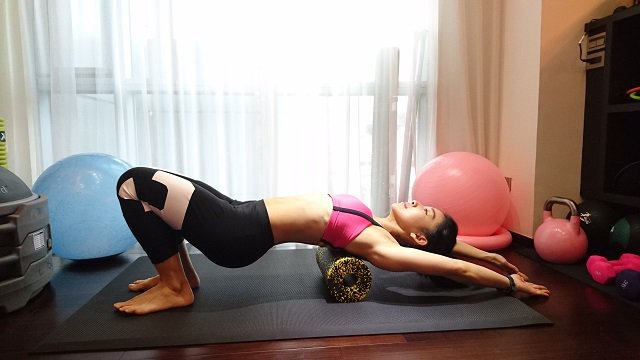
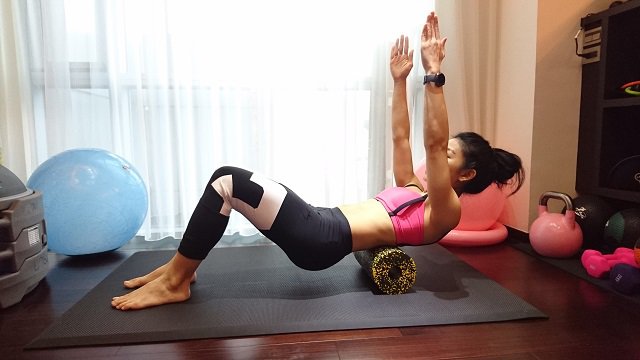
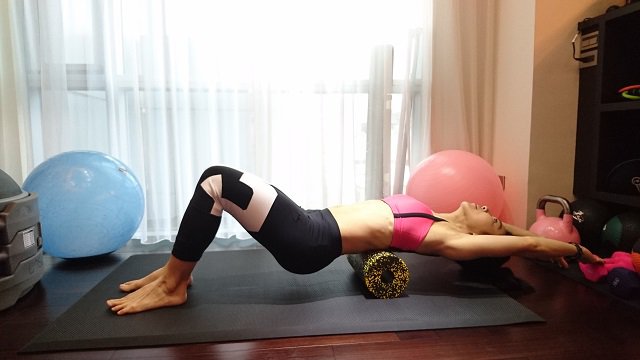
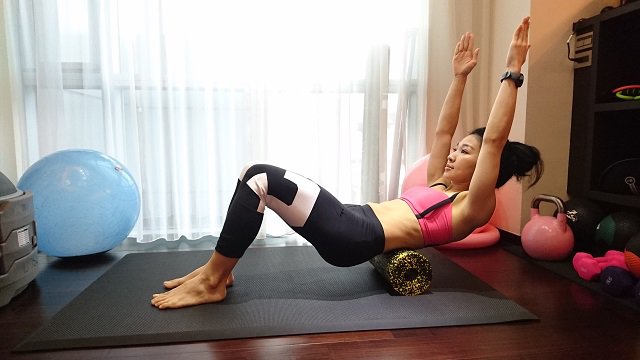
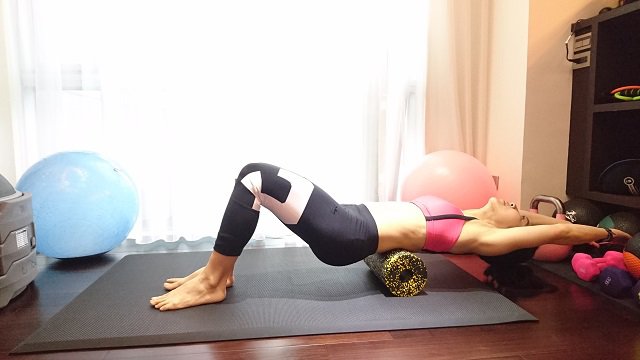
放鬆背部筋膜與胸部肌肉伸展
將滾筒放到背部肩胛位置,來回滾動數次,並且雙手保持伸直朝上方向。
接著將雙手往後方伸直碰地板,讓胸部肌肉群做伸展。
接著將滾筒往下滾一點,重複以上滾動與伸展動作。
將背部分成三個區塊,再往下滾,並且重複伸展胸廓動作。由上滾動到下,再由下滾動到上重複一輪。
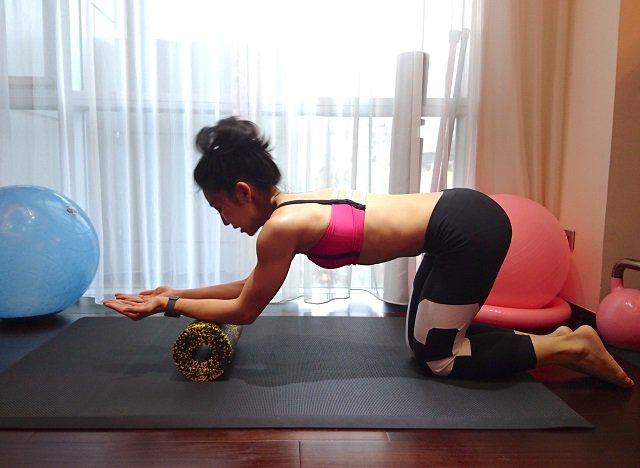
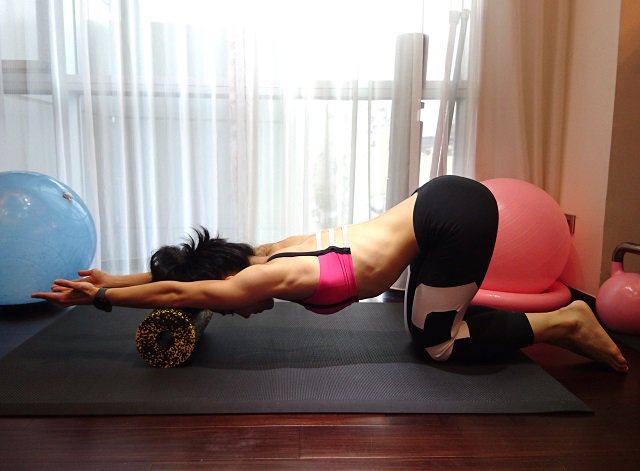
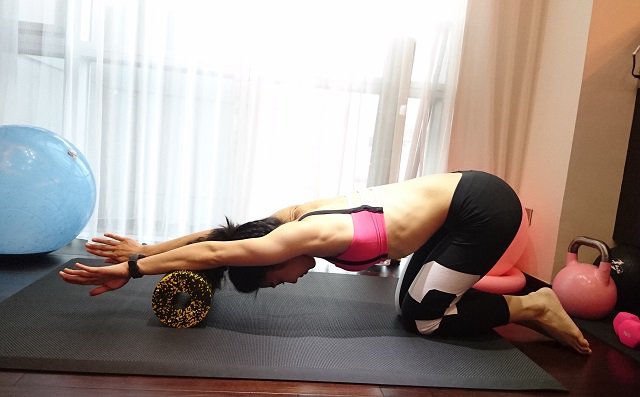
背部與胸部肌肉伸展,軀幹側邊筋膜伸展
採取以下姿勢,滾筒放在前臂位置,愈靠近手腕伸展範圍愈大。
保持臀部位置,將滾筒往前滾,身體順著滾筒下去。手心朝上時,伸展到更多背闊肌。
手掌朝內並在滾筒往前滑石順勢將手掌轉到外側,可以伸展到更多軀幹側邊筋膜。
記得,良好的筋膜連結韌性,是經過「訓練」來的!小寶寶在成長的過程中,不斷經由爬行扭動來「做自己的功能性訓練」,讓筋膜與神經肌肉發展於來愈強壯。當你成長後,動得反而愈來愈少,筋膜也會因此乾枯退化!
筋膜組織的半衰期(簡單解釋為代謝汰換)為6-12個月!所以不論是運動或是按摩,都必須持之以恆有耐心,健康好體態才會伴隨著你長長久久喔!
作者簡介
筋肉媽媽Melody

Flag Counter